US Imposes Sanctions Against International Criminal Court
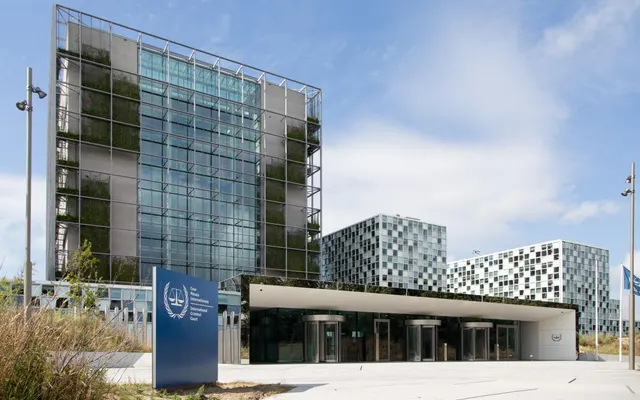
The United States has imposed sanctions on the International Criminal Court (ICC). According to a statement from the State Department, the decision aims to restrict the court's activities and prevent possible criminal prosecution of American citizens, military personnel and political leaders.
According to Washington's position, the ICC has no jurisdiction to try American citizens because the United States is not a member of the court. The sanctions provide for a ban on transactions related to the court, restrictions on access to resources and weakening of its operational capacity.
According to the statement, the US had been waiting for more than a year for concrete goodwill steps from the court, but neither the court nor its member states took effective measures to address Washington's concerns. The State Department writes that it is still considering the possibility of resolving the issue through diplomatic means, and the sanctions leave member states room to offer negotiations and a way to resolve the disagreement. If diplomatic efforts do not yield results, Washington will continue measures against the court.
The US expects its allies to influence the court's activities and limit the expansion of its jurisdiction. Otherwise, Washington says it will continue its campaign to dismantle the ICC until, in its assessment, the threat to Americans is eliminated.
Secretary of State Marco Rubio said: "Our message is clear: the United States and its citizens are not subject to the jurisdiction of the International Criminal Court (ICC). Both parties agree on this issue, but only President Trump has the necessary political will to take the necessary steps to eliminate this threat once and for all. Either the ICC will stop its threats, or we will finish it. We expect our allies, many of whom are ICC members and whose defense depends on American military personnel, to bring the court's activities into an appropriate framework."
The ICC strongly condemned the decision and described the sanctions as an attack on the foundations of international law. According to the court, the step is directed against an independent institution created on the basis of an international treaty, which was given the mandate to investigate and prosecute genocide, crimes against humanity, war crimes and the crime of aggression by 125 States Parties to the Rome Statute.
The statement says: "This is an attempt to obstruct the administration of justice and to impede the court in performing its core function. This is an attack on the foundations of the rule of law and the international legal order, which contradicts a simple principle – no one is above the law." According to the court, the aim of the sanctions is to hamper the institution's work and intimidate people who work with or cooperate with the court.
ICC President Tomoko Akane said that, despite the pressure, the court will continue its work: "The court will fully carry out its mandate independently and impartially, based only on law and evidence, in the interests of the many victims of serious crimes."
The court believes that responsibility for its future also lies with the states that created the ICC. The statement stresses that the Rome Statute is a common obligation of the international community, under which the most serious crimes must not remain unpunished. The ICC notes that no one should be punished for serving justice, while the response of the international community will determine how far it upholds the principles it has itself declared allegiance to.
The foreign ministers of Canada, Denmark, Germany, France, Italy, Japan, the Netherlands and the United Kingdom condemned the US decision. In a joint statement they reaffirm support for the independence and impartiality of the ICC, express concern about Washington's decision and disagree with the imposition of sanctions. According to them, the sanctions could seriously harm the court's work, its staff and their family members. The ministers stress that ICC staff work every day so that those charged with the most serious international crimes are brought to justice.
The eight ministers state that, alongside supporting the court, they are ready to continue constructive and inclusive dialogue with States that are not parties to the Rome Statute. This process is part of preparations for the Assembly of States Parties planned for December 2026. The ministers say that they will continue, through joint efforts, to support the ICC's work, protect the rules-based international system and promote accountability for international crimes.
So far the US has sanctioned ICC Prosecutor Karim Khan and court judges, including Georgian judge Gocha Lordkipanidze. In the order sanctioning Khan, one of the reasons cited was the issuance of arrest warrants for Benjamin Netanyahu and Yoav Gallant. In the case of the judges, the reason cited was that "they participated in judicial actions against the United States and its ally Israel". The sanctions provide for freezing the assets of sanctioned persons under US jurisdiction and a ban on certain financial operations with them.
On November 21, 2024, the ICC issued arrest warrants for Israeli Prime Minister Benjamin Netanyahu and Yoav Gallant. According to the court, there were reasonable grounds to believe that they may have committed war crimes and crimes against humanity in Gaza. The charges include the use of starvation as a method of warfare, intentionally directing attacks against civilians, murder, persecution and other inhumane acts. The same day, the ICC rejected two Israeli motions concerning the court's jurisdiction and investigative procedures. The ICC found that it had jurisdiction in relation to the situation in Palestine, including Gaza and the occupied West Bank, including East Jerusalem.
On July 16, 2025, Israel asked the court to revoke or declare void the arrest warrants for Netanyahu and Gallant and to suspend the Prosecutor's investigation. On July 24, 2025, the ICC Pre-Trial Chamber found that Hungary had failed to comply with the court's request regarding the temporary arrest of Netanyahu and referred the matter to the Assembly of States Parties. A decision of October 17, 2025, concerning Israel's request for leave to appeal on Hungary's cooperation regarding Netanyahu's arrest, has also been published in the court's registry.
The ICC has also worked on the Georgia case. The investigation concerned alleged war crimes and crimes against humanity committed during the 2008 Russia-Georgia war. It covered the period from July 1 to October 10, 2008, and mainly addressed events in the South Ossetia region and adjacent territories. On January 27, 2016, the Pre-Trial Chamber authorized the Prosecutor to open an investigation. The court examined alleged crimes against civilians, including murder, forcible displacement of the population, persecution, unlawful detention and destruction of property.
On June 30, 2022, the ICC issued arrest warrants for Mikhail Mindzaev, Hamlet Guchmazov and Davit Sanakoev. They are suspects in alleged crimes committed against the ethnic Georgian civilian population during the August 2008 war. According to the court, the case concerns, among other things, unlawful detention of civilians, torture, ill-treatment, hostage-taking and unlawful transfer. On December 16, 2022, the ICC Prosecutor announced the completion of the investigation phase in the situation in Georgia, which does not mean the automatic closure of cases before the court.
ICC arrest warrants are not convictions. They are based on the court's assessment that there is a legal basis to suspect the persons concerned of alleged crimes. The fact that a crime was committed can only be considered established after a relevant court trial and verdict.
RELATED STORIES
- US to Broadcast Live Execution of Fort Hood Shooter
- Putin Meets Pezeshkian: Iran Seeks to End Conflict
- 504 people detained at protests in France, 48 law enforcement officers injured
- Armenia Tightens Residency Rules and Raises Fees from November 1
- Ramzan Kadyrov Begins Fifth Term as Chechen Leader
- Lida Monyava's Electronic Ankle Monitor Removed and All Restrictions Lifted