Three tankers change course away from US, Trump-Putin diesel deal collapses
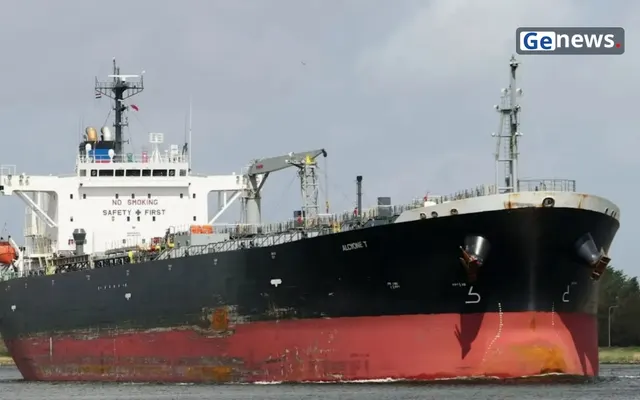
The agreement reached between Donald Trump and Vladimir Putin on Russian diesel exports to the United States has effectively collapsed. Three tankers loaded with Russian diesel, which were due to arrive at US ports, changed course and headed in a different direction. According to Western media assessments, the agreement, which Trump announced loudly ahead of the November 3 midterm elections, is effectively over.
The agreement was concluded against the backdrop of a crisis caused by a sharp rise in fuel prices and the cost of living in the US. Trump claimed that importing Russian diesel would lower prices for Americans, especially farmers, cattle breeders and truck drivers. The agreement was announced on October 9: Trump wrote on Truth Social that it would ensure lower prices. The move did not protect Republicans from defeat in the midterm elections: Democrats won a convincing victory nationwide.
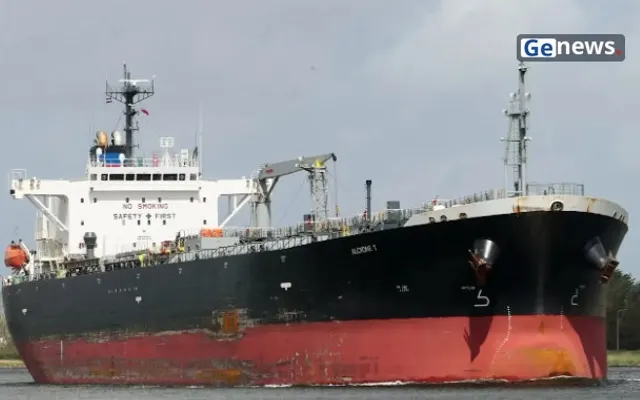
According to the Financial Times, three tankers — Agioi Fanendes, Talisman and Leruo — set off from Russia to deliver diesel to the US, but all three changed their original course. The Malta-flagged Agioi Fanendes will carry 40,000 metric tons of diesel and was Trump's last hope of fulfilling the agreement with Putin. The vessel's destination is now listed as "awaiting orders". According to Meta Smith, an analyst at Kpler, the tanker was expected to arrive in New York on November 7-8, a few days ago.
The Talisman, which is on the sanctions list, left the area near St. Petersburg on October 22. After passing the English Channel, it headed south, went around the Bay of Biscay and the coast of Portugal, and entered the Mediterranean through the Strait of Gibraltar. Leruo, which is under sanctions from the EU, the United Kingdom and the US, is heading southwest across the Atlantic Ocean, and its official destination is now Brazil. According to Smith, it is highly likely that Agioi Fanendes will also sell its diesel in another market, as will the other two tankers.
Moscow denies reports of a change of route. Kirill Dmitriev, a Kremlin representative and participant in the negotiations, wrote on X that "tankers heading to the US are maintaining their course". Presidential press secretary Dmitry Peskov said the details of the shipments are a commercial matter and cannot be made public. "Diesel will find its buyer," he said. On November 5, Trump met Dmitriev at the White House; the details of the meeting were not disclosed to journalists.
Kevin Rowlands, a maritime security specialist at the Royal United Services Institute, said: "The diesel agreement, in practical terms, is dead. In theory, it may remain in force, but I do not believe that any significant volume of Russian oil or diesel will be shipped through the US in the near future." According to him, the route of all three tankers was unstable from the start.
After Trump's statement, the US Treasury Department issued a regulation allowing American companies to buy, transport, unload and import Russian diesel despite sanctions. Moscow lifted a ban on diesel exports, which had been imposed a few months earlier due to a fuel shortage in Russia; the shortage was caused by Ukrainian air strikes on Russian oil facilities. The movement of the tankers was monitored by organizations and companies such as Greenpeace and Kpler.
Trump's decision drew protests from both sides of the US political spectrum. Analysts also questioned the economic rationale of the agreement: in their assessment, the several hundred thousand metric tons of diesel promised from Russia would not meet US demand for even one day. The arrival of three tankers would still have allowed Trump to say that he had kept his promises.
Maximilian Hess, founder of Enmetena Advisory, said that it is difficult to determine the exact reason for the change of route, but there are several possible explanations. The first relates to legal and political risks for buyers of Russian diesel, despite the fact that Trump signed a document granting an exemption from sanctions. According to Rowlands, the president can conclude an international agreement, but its implementation at the federal level may face resistance from state governors. New Jersey Democratic Governor Mikie Sherrill threatened ports receiving Russian diesel with legal disputes and fines of millions of dollars. Agioi Fanendes was to deliver its cargo to the port of New York and New Jersey, which is under the joint port authority of both states and partly falls under Sherrill's jurisdiction.
Another problem is the different legal regimes of sanctions. Opponents of the agreement argue that Trump's order does not extend to the 2022 law on the cessation of Russian oil imports, under which the president must obtain congressional approval before granting an exemption from sanctions. According to Hess, sanctions by the EU and the United Kingdom are an additional obstacle: finding a buyer in the US for the first two tankers' diesel proved difficult, as no company wanted to risk violating sanctions. Sanctions apply if a European entity — an insurer, bank or other intermediary — is involved in the transaction. If that was the reason, Hess assessed, it is "a victory for measures aimed at circumventing European policy and sanctions".
According to Rowlands, Moscow realized that Trump had lost political authority, and the results of the midterm elections confirmed that the risk of US authorities detaining Russian tankers in American ports had increased significantly. In his view, governors like Sherrill will now be more willing to resist the decisions of a weakened president.
Another version holds that the tankers never intended to reach the US. Dirk Ziebels, a maritime security specialist at Risk Intelligence, suggests that Trump's decision was driven by political aims and was intended to lower fuel prices ahead of the midterm elections. According to him, the images of tankers heading to the US were meant to send a specific signal to financial markets. In this version, the political benefit of the agreement with Trump was so important to Moscow that Russia was ready to first send the ships to the US and then change course toward their actual destinations, including Brazil, incurring additional transport costs.
"As soon as the elections were over and this attempt did not produce a result, there was no longer any reason to maintain this illusion," Rowlands said. In his assessment, the change of route is the best possible outcome for all sides: the US avoids another reason for conflict between the president and the Democrats, Russia will sell its diesel in other markets, and Europe welcomes the collapse of Trump's Russian diesel agreement.
People in this story

RELATED STORIES
Trump Appoints Stephen Miller as White House Chief of Staff, Susie Wiles Moves to Campaign Team

Kallas: Any Peace Deal Must Bar Russia From Renewed Attack

Dmitriev: Russian diesel tankers bound for US continue course
Rubio on Reports He Will Leave Administration: "Which One?"
Trump After Meeting Dmitriev: "There Will Be a Deal, a Big Deal"
Hegseth: War on Iran Is Brave and Historic, Impeachment Will Not Work
- Around 575,000 people took part in protests in France

- Zelensky Expects Stronger Support for Ukraine After US Midterm Elections

- Melania Trump Sends Personal Letters to Zelensky and Putin
- Two of Three Russian Diesel Tankers Bound for US Change Course
- Burnham: UK Will Not Invite Putin to 2027 G20 Summit
- UN: Greenland and Antarctic Ice Melting 6 Times Faster Than in 1990s