SJC: Cash Compensation Threatens Long-Term Housing for IDPs
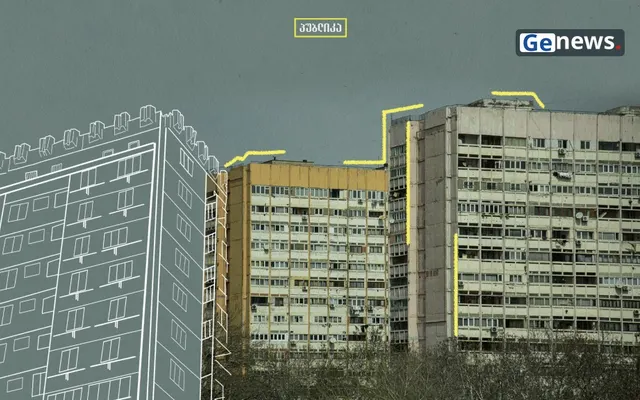
According to the Social Justice Center (SJC), the government's introduction of cash compensation for internally displaced persons (IDPs) threatens their long-term resettlement. The organization assesses the government's initiative, under which a program was launched alongside the construction of residential buildings to provide IDP families with cash compensation instead of housing. Participation in it is voluntary.
Under the program, every IDP family that has not previously received housing or compensation may apply for compensation. The amount is 10,000 GEL per family member and is paid no later than 45 calendar days after the application process is completed. The content of the program was approved by the Minister of IDPs from the Occupied Territories, Labour, Health and Social Affairs on October 13: an order of the minister from 2021, "On Approval of the Procedure for Providing IDPs with Housing", was amended. Until now, long-term provision included transferring housing into IDPs' ownership and purchasing private property, and now a third option has been added.
Applications are received and preliminarily assessed by the Agency for IDPs, Eco-Migrants and Livelihood Support. The agency verifies the identity of applicants and whether they have used any housing assistance program. Afterwards, applications are transferred to the Monitoring Department by decision of the commission studying IDP issues. Compensation is paid if the persons have not used any program and the family composition stated in the application matches the monitoring results. By receiving compensation, the state releases applicants and the direct descendants of their family members from the obligation to provide housing, and the family will lose the opportunity to join resettlement programs in the future.
According to Irakli Kobakhidze, 58 million GEL is allocated to the program this year, and it will continue in the following years with an increased budget. According to SJC's assessment, this shows that the government expects many families to request compensation.
According to the organization, the program will not only fail to promote long-term and dignified resettlement of IDPs, but will also create a real risk of homelessness and social marginalization for families without housing or savings. SJC believes the amount may prove insufficient to buy housing, and agencies have not explained what methodology was used to determine the amount. The organization compares other programs: one-time assistance for eco-migrants is 30,000 GEL, up to 50,000 GEL for homeless large families, while under the "Village House" program a single-person family receives 22,000 GEL and a pregnant family receives 25,000 GEL.
SJC points out that by the end of 2025, 97,280 IDP families were registered in Georgia, of which 45,160 had not yet received long-term housing. In the same period, 19 facilities posing heightened risk were not closed, and 385 IDP families lived in them. Citing the Public Defender's parliamentary report, the organization notes that part of the resettlement initiatives are not being completed within the planned deadlines. By 2025, IDP resettlement was supposed to take place in Tbilisi, Zugdidi, Kutaisi, Rustavi and Borjomi, but within the deadlines, and only partially, it was completed only in Kutaisi and Tbilisi.
According to SJC, after years of waiting and difficult social conditions, families may see compensation as the only way out of a hopeless situation rather than a free choice. The organization recalls that in previous years, IDPs received one-time sums, for example 7,000 US dollars, in exchange for leaving compact resettlement facilities, and a large part of them nonetheless remained without housing. At the same time, SJC notes that compensation may be useful for families who already have housing or some savings.
According to the organization, widespread use of the program may lead to a formal reduction of the state's housing obligations without the actual number of IDPs left without adequate housing decreasing. SJC also points out that the content of the term "compensation" is unclear, and whether IDPs are obliged to use the money for resettlement.
The center calls on the government to publicly explain the legal consequences of the program before it is launched, justify the adequacy of the compensation amount, and create guarantees that IDP families will not be left without state support if they cannot purchase adequate housing with the money. The organization also demands strengthening and accelerating existing long-term resettlement programs.
RELATED STORIES




- Kavelashvili: Svetitskhoveli Reminds Us Who We Are and What Values Our Future Should Rest On

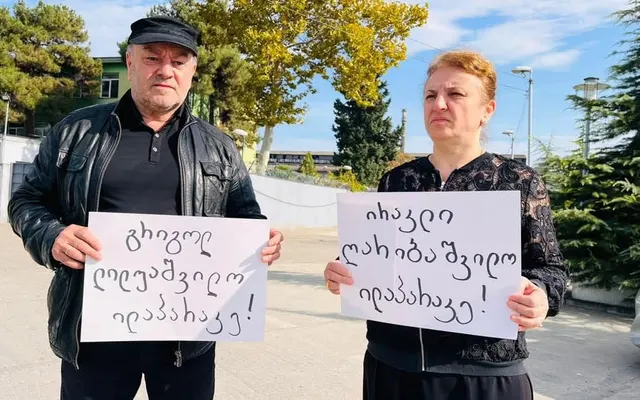
- Bachaliashvili's Parents Address Liluashvili and Garibashvili Outside Rustavi Prison
- Religion Affairs Agency Congratulates Orthodox Church and Congregation on Sveticხoveloba

- Svetitskhoveli Feast to Be Marked with Liturgy Led by Catholicos-Patriarch in Svetitskhoveli Cathedral
- Iranian Activist Mohammad Mahdi Rahimian Detained in Tbilisi

- Patriarchate Denies Accreditation to TV Pirveli and Formula for Sveti-Tskhoveli