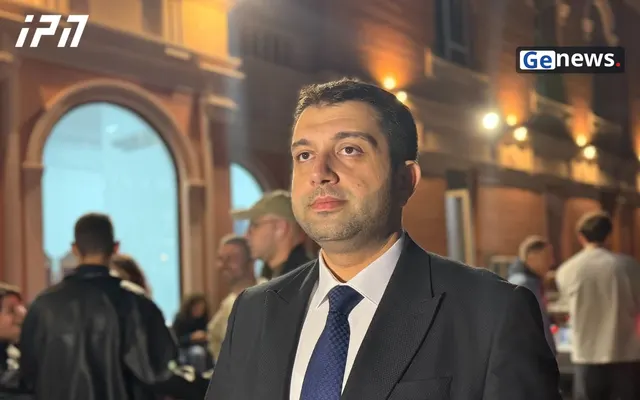
Nadaraia to Gvaramia: I Have No Information on Judges' Corruption
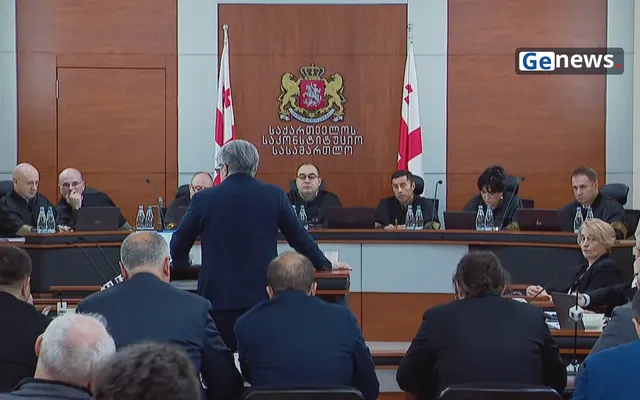
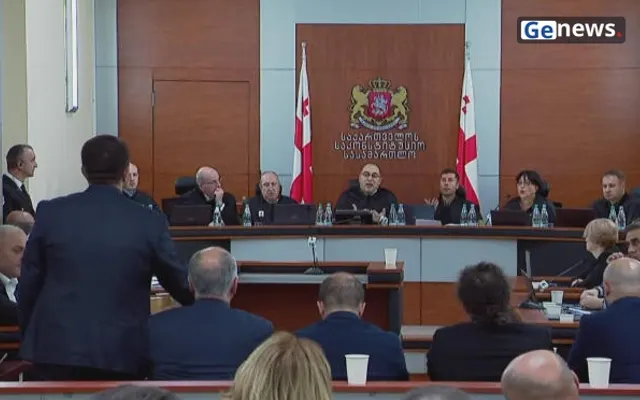
Constitutional Court Chairman Revaz Nadaraia says he has no information about judges being corrupt. He told this to Nika Gvaramia, one of the leaders of the "Coalition for Changes", on October 29 during the hearing of the case on banning opposition parties. The court is considering a lawsuit filed by 88 deputies.
Gvaramia presented an explanation at the session and mentioned the "Georgian Charter", which was an initiative of Salome Zourabichvili in 2024. The lawsuit cites the Charter as one of the grounds for banning opposition parties: the plaintiffs claim that the opposition cooperated, and this may become grounds for a ban. Gvaramia spoke about vetting of judges, that is, the verification of integrity, which was also demanded by the Charter. According to him, Georgian Dream also names this as one of the grounds for the ban.
Gvaramia explained that offering integrity and background checks for judges does not mean abolishing the independence of the court. In his words, the Charter envisaged court reform within the framework of political cooperation, and this issue was not formulated in the lawsuit as an independent charge. The signatories of the Charter offered voters a program of changes, the implementation of which required constitutional and legislative procedures.
He noted that the Venice Commission has considered similar mechanisms for checking judges in the cases of Albania and Moldova, with appropriate guarantees. Gvaramia also pointed to the vetting procedures created on the recommendation of the European Union.
According to Gvaramia, the plaintiff must indicate which specific provision of the Charter envisages the political weakening of the court. He also said that if the court considers the proposed model incompatible with the Constitution, this does not automatically mean there is grounds for banning the party, because a party may call on society, relying on legal and democratic means, to change the Constitution and legislation. In this context, he also recalled Bidzina Ivanishvili's promise to amend the Constitution regarding the banning of parties.
At this point Nadaraia interrupted Gvaramia and explained that if the party's position was that the demand for vetting judges did not contradict the Constitution, this position had to be substantiated. Nadaraia also noted that during the discussion the conversation had turned to specific judges. Gvaramia replied that he did not name specific judges and did not intend to. In his words, the discussion concerned the purpose of vetting: to determine whether there are judges in the system whose removal from office would be necessary on the basis of appropriate verification.
"The task of vetting is to determine whether there are such judges, and if there are, to remove them", said Gvaramia.
Nadaraia called on Gvaramia to show respect for the judicial system and noted that the system includes both the Constitutional and common courts. According to him, Gvaramia's position on vetting is understandable, but discussing his views on the organization of the judicial system goes beyond the scope of the case.
"Do not go beyond what you are saying. I have no information about judges being corrupt, you are raising the issue provocatively and do not go beyond the [topic]. First of all, respect the judicial system. The judicial system includes both the Constitutional Court and the common courts, respect both. Your position on whether vetting or whatever form of judicial reform the Charter demanded is not against the Constitution is understandable. What are your views on the organization of the court, you can talk about that elsewhere", said Revaz Nadaraia.
Gvaramia explained that the mechanism for checking judges does not imply targeting specific individuals. In his words, this procedure is also possible on the basis of Georgian legislation, although its implementation would presumably require constitutional amendments.
"No one is able or intends to do this without constitutional procedures or parliamentary legislative procedures", Gvaramia stated.
In his words, it is unclear how offering judicial reform, which can be carried out through law and constitutional procedures, can be assessed as an attack on the constitutional order.
RELATED STORIES
Samadashvili: Our only demand is that Elene Khoshtaria be released from prison
Cheishvili: Respondent Side Has an Acute Deficit of Legal Arguments
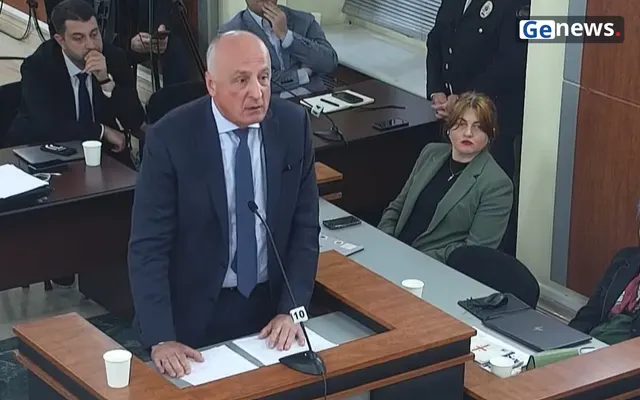
Japaridze at Constitutional Court: "Dream" Ban on Parties Paves Way for Constitutional Coup

Ana Tsitlidze: Bringing Khoshtaria to This Condition Is Georgian Dream's Responsibility
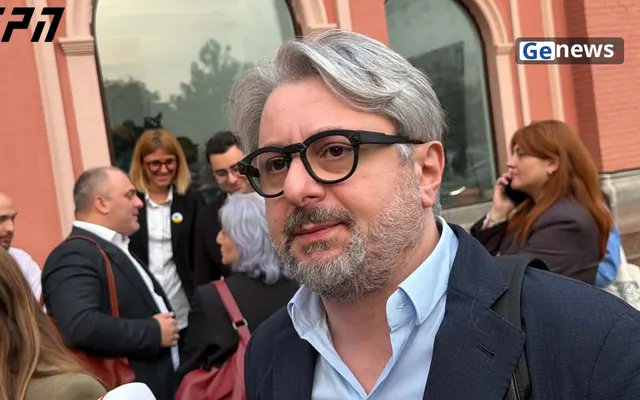
Gvaramia at Constitutional Court: Under Plaintiff's Standard, Georgian Dream Itself Is the Party to Be Banned
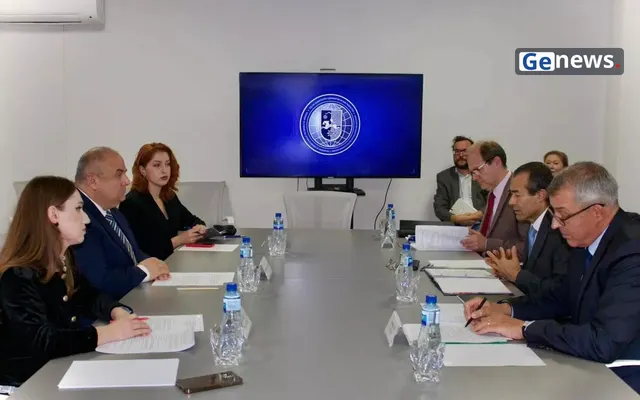
Co-Chairs of UN, OSCE and EU Meet Bigvava in Sukhumi Ahead of 68th Geneva Round
- Lemonjava at Constitutional Court: Georgian Dream's Lawsuit Repeats Russian Doctrine Provisions
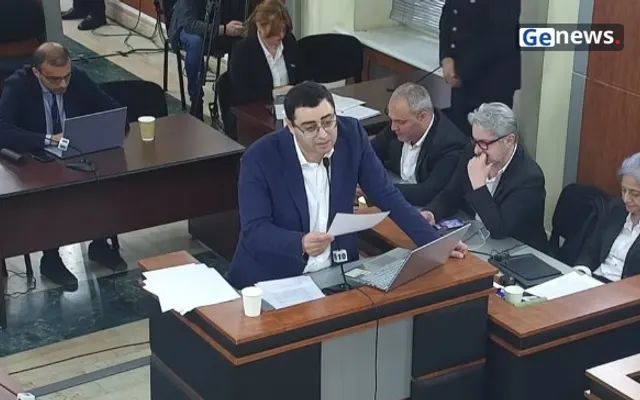
- Kobakhidze Meets Kwasniewski: Opioid Substitution Therapy Benefits 14,000 Patients
- Constitutional Court to resume hearing on party case tomorrow at 11:00
- Protesters Shout "Slaves" at Georgian Dream Members Outside Constitutional Court
- Cheishvili: Opposition Insulted Hundreds and Thousands of Citizens
- Artkmeladze: Banning Parties Will Destroy in One Stroke What Was Built Over 35 Years