MEPs: Banning Parties Would Be Step Toward One-Party System
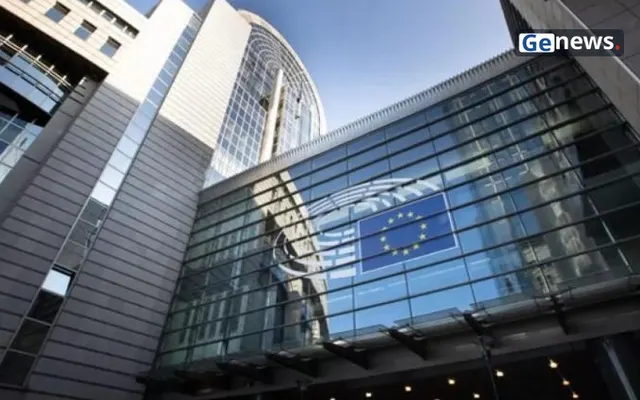
European Parliament Foreign Affairs Committee Chair David McAllister, Chair of the Delegation for Relations with the South Caucasus Nils Ušakovs and Standing Rapporteur for Georgia Rasa Juknevičienė are issuing a joint statement. In their assessment, banning established political parties would be a decisive step backward toward a one-party system, similar to the examples of Russia and Belarus.
The statement says: "We note Mr. Kobakhidze's call for political dialogue with the European Union. Dialogue was never closed by Europe; 'Georgian Dream' has hollowed it out. In November 2024, the ruling party unilaterally suspended Georgia's accession process, contrary to its own constitution and the will of its own people."
According to the MEPs, since then the government has responded to every call from EU institutions with new repressive laws, violence against peaceful demonstrators, and the arrest of opposition leaders and journalists. The European Parliament's decision to restrict formal contacts is a consequence of these decisions, not their cause. In their words, the door of the European Parliament has always been open to the Georgian people, civil society and the democratic opposition, while it will open for the government only when its actions, not its words, show a return to democracy, freedom and the European path.
The authors of the statement believe the timing of Kobakhidze's proposal speaks for itself: it was made against the backdrop of the Constitutional Court beginning to consider 'Georgian Dream's' request to ban five opposition parties. Among them is the last opposition party represented in parliament. In the MEPs' assessment, a government seeking to declare its political opponents outlaws cannot at the same time present itself as a reliable partner for dialogue. Therefore, the proposal for political dialogue with the EU is, for them, a cover for destroying political pluralism in Georgia.
The MEPs recall the resolution of 8 October 2026 and state that they strongly condemn attempts to ban opposition parties and call for the immediate withdrawal of the constitutional lawsuit. In their words, such a step would distance Georgia further from the EU and rule out any progress toward membership. They say they do not recognize the government that emerged from the flawed elections of October 2024.
According to them, any genuine re-engagement must be based on unconditional steps by the government: the release of all political prisoners; the repeal of laws that restrict civil society, independent media and political activity, including restrictions that have forced European political foundations to leave the country; an end to the persecution of opposition members, journalists and activists; and opening the way to new, free and fair elections.
The MEPs call on the Council and Member States to take tangible steps, including imposing targeted sanctions on those responsible for human rights violations and Georgia's democratic backsliding. This could be done under the EU Global Human Rights Sanctions Regime (the so-called 'EU Magnitsky Act') or other sanctions regimes.
RELATED STORIES
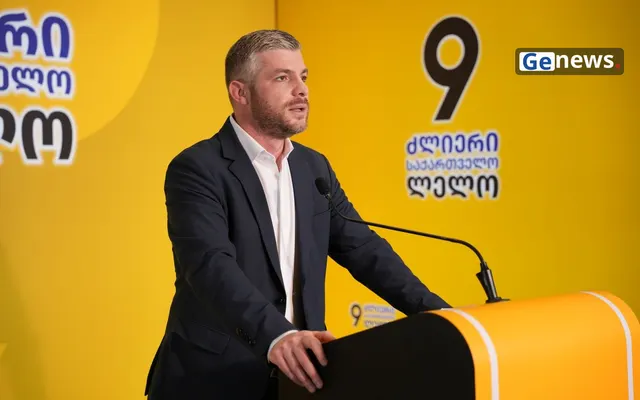
Kupradze: For Three Days We Have Been Watching a Politicized Process at the Constitutional Court
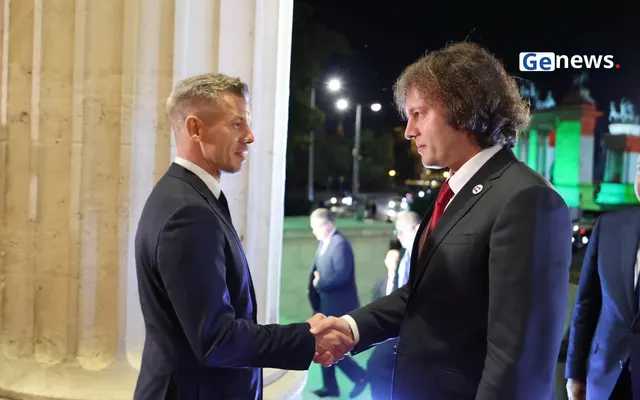
Kobakhidze Attends Official Reception Hosted by Hungarian Prime Minister

Sharashidze: Constitutional Court Is Turning Into 'Theater of the Absurd', Zurabishvili Should Use Common Sense
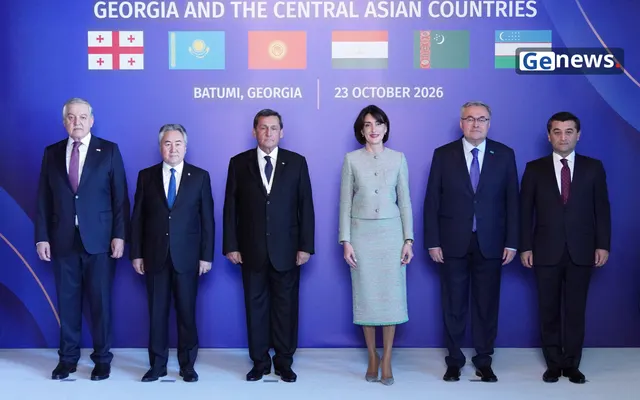
Foreign Ministers of Georgia and Central Asian Countries Meet for First Time in Batumi
Melashvili: Banning Parties Is a Red Line That Will Bring Georgia Closer to Russia
Kobakhidze Attends 70th Anniversary Events of Hungarian Revolution in Budapest
- Chergoleishvili: 'Federalists' Refuse to Take Part in Ivanishvili's Show at Constitutional Court

- Nadaraia: Hearing on Party Case to Resume Monday at 14:00
- Bochorishvili: Strong Political Dialogue Needed for Economic Results with Central Asia
- Lortkipanidze: Alone, Georgia Will Be Crushed by the Russian Empire
- Gegelia: Zurabishvili's appointment creates a sense of capitulation
- Sikharulidze: Russia Seeks to Destroy Geneva Format Through Georgians' Hands