Protests Over Removal of 130 Million Voters From Delhi Rolls Lead to Arrests
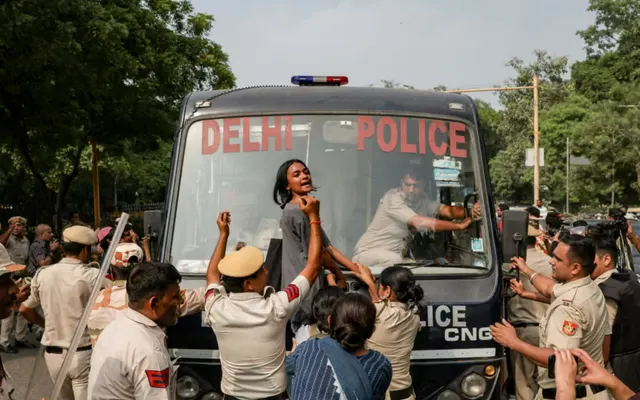
Protests in the Indian capital Delhi against the removal of millions of people from electoral rolls have been met with mass arrests, internet shutdowns and strict security measures. Demonstrators are demanding the resignation of Election Commission chief Gyanesh Kumar and a halt to the Special Intensive Revision (SIR) of electoral rolls.
The new wave of protests was triggered by the removal of 130 million people from the electoral rolls, although public discontent has continued for several months. According to Reuters, among those removed, 28 million are dead, 63 million have changed their place of residence, and 30 million are people whose whereabouts could not be determined. These figures show the scale of the review, but do not confirm that all removed records belonged to eligible voters.
Last week, protests were held every day. On the weekend, Delhi was blocked: barricades were erected on the streets, roads were closed and soldiers were deployed. On October 10, ahead of a protest by the opposition party "Cockroach Janta", the authorities cancelled 245 trains heading to Delhi, closed 45 metro stations, shut down shops selling alcoholic beverages and cut internet services in the city centre. Some activists were placed under house arrest.
According to The Guardian, on October 11, founders of the party "Cockroach" were taken off an Air India plane immediately after landing at Delhi airport. Opposition leaders were held in various police stations for more than eight hours.
Circulated video footage shows police beating students and activists and forcibly dragging them off the streets. Journalists were among those detained. Police also forcibly took away a lawyer who was providing legal aid to detainees; during the arrest, his shirt was torn.
Repression also reached Mumbai: police took Tushar Gandhi, great-grandson of Mahatma Gandhi, away to prevent him from taking part in a local protest. On Monday, Delhi police removed Jantar Mantar from the list of sites designated for protests and offered demonstrators three alternative locations.
Political activist Yogendra Yadav, who was himself detained, said: "I have been involved in public life and have been observing politics for four decades, but I have never seen such preparation for a demonstration. By any measure, this was completely stunning". According to him, despite what he calls "state-orchestrated terror", small groups held unexpected protests in several districts of Delhi.
The actions of the Delhi authorities were preceded by similar aggressive police actions against Congress Party protests. The protests were led by opposition politician Rahul Gandhi. Footage of his and his sister Priyanka's detention spread across the country.
Amnesty International has called on the government to protect the right to peaceful assembly and questions the legality of the detentions and internet shutdowns. Ravi Shankar Prasad, a representative of the ruling Bharatiya Janata Party, accused the opposition of using the protests for political purposes after losing the elections. At a briefing he said: "First: Indian democracy has prevented attempts to incite anarchy. Second: the country is governed by Parliament, not the street".
The Guardian writes that restrictions on protests are not new to India, but the scale of measures taken in the capital this time is attracting attention. In Indian-administered Kashmir, authorities have imposed much stricter restrictions in the past, particularly in 2019, after the repeal of Article 370 of the constitution.
The latest protests demanding Gyanesh Kumar's resignation began after the newspaper The Indian Express published an investigative report. According to the outlet, two other members of the election commission, Sukhbir Singh Sandhu and Vivek Joshi, expressed concern about planned changes to voter lists, registration procedures and digital systems. Kumar did not publicly respond to the investigation. The Election Commission said in a statement that "differing opinions" are part of the decision-making process.
According to The Guardian, discontent is not linked to this investigation alone. The "special review" of rolls is criticised for forcing citizens through complicated registration procedures and leaving the most vulnerable groups in uncertainty and bureaucratic deadlock. Critics and opposition leaders argue that the process is planned in the ruling government's favour.
Ashok Lavasa, a former election commissioner, described the process as unprecedented and unfair, saying it departs from the commission's traditional approach of ensuring maximum voter participation. In his words: "For more than seven decades the Election Commission considered it its duty to include in the voter list all those who had the right to vote. This was one of the main differences between the functioning of Indian democracy and other democracies, where you have to apply to the relevant authority yourself to register as a voter". Lavasa said voters accustomed to a flexible procedure are now facing a hostile system, which in the long term is harmful to democracy.
According to Yogendra Yadav's assessment, events around the SIR revealed a deeper problem: the process by which the ruling party is seizing control of democratic institutions. In an interview with The Guardian he said: "Elections have now become the only remaining mechanism for granting legitimacy to the regime, and establishing control over the electoral process is decisive for its survival. That is exactly why Gyanesh Kumar's role is so important".
Yadav also drew attention to a 2023 law that grants election commission members legal immunity for actions taken while performing their official duties. According to him, this protection is broader than the immunity granted to judges. Yadav believes that at a later stage three forces could unite around a common goal: opposition parties, organised civil society groups and ordinary citizens. In his assessment, it will become increasingly difficult for the government, which has not yet shown any sign of backing down, to make decisions over time. "The longer the decision is delayed, the higher the stakes will be", he said.
On Monday, the legislative assembly of the state of Kerala adopted a resolution calling for Gyanesh Kumar to be removed from office. Representatives of opposition parties, meanwhile, applied to the Supreme Court and requested measures against him.
The Cockroach movement and left-wing student groups pledged to continue the protests. Left-wing student leader Danish Ali said: "People no longer want to live in fear. They will come out onto the streets again and again". He added: "We live in a democratic country, and protest is a fundamental right that no one can take away from us".
RELATED STORIES

- Ukraine Elected Member of UN Human Rights Council
- Five Fraudulent Call Centers Liquidated in Chisinau, 21 Searches Carried Out
- EU Opens Two More Clusters in Ukraine Accession Talks
- Trump: US Shares Intelligence With Ukraine and Works With Kyiv and Moscow to End War
- Kallas: EU Foreign Ministers to Agree Largest Sanctions Package Against Russia on October 12

- London: We Will Maintain Pressure on Russia with the Toughest Sanctions