Manana Kobakhidze's Powers as Constitutional Court Judge Terminated Early
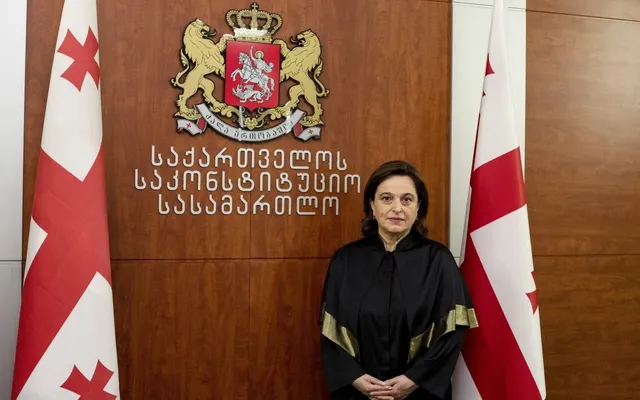
Manana Kobakhidze has left her post as a judge of the Constitutional Court. The information was released by the Constitutional Court.
According to the court's statement, Kobakhidze's powers as a judge were terminated early, effective from October 13, 2026, under the court chairman's order No. 2, based on her personal application. The Constitutional Court wishes her success in her future activities.
On October 12, it became known that Kobakhidze had requested recusal from hearing the lawsuit on banning parties, but the court did not grant the motion.
As grounds for her recusal, Kobakhidze cited that her past political activity and public criticism of the "United National Movement" could raise a well-founded doubt in society about the impartial and objective consideration of this case. According to her, it is known to the public that she was a founder of "Georgian Dream", the party's chairman and a member of parliament. Even before her political activity, she publicly criticized the "United National Movement" and specific members who are now among the other defendant parties in the lawsuit. She also demanded accountability for actions that, according to the constitutional lawsuit, are cited as the main arguments for declaring these parties unconstitutional and banning them.
The document published by the court says: "Moreover, at one of the plenary sessions of parliament, which was broadcast publicly, she directly called on the members of the "Unity - National Movement" to dissolve the party and leave the political arena altogether."
Kobakhidze points out that after being elected a judge, she acts solely in accordance with the constitution, with the high responsibility of a judge, and that there is no basis for casting doubt on her impartiality. By her own account, however, these circumstances may still raise questions about her impartiality and independence, which would undermine the court's trust.
The plenum did not grant the motion. According to the court, Kobakhidze's past political statements were general criticism and there was not sufficient basis to assume that the judge would decide the case in a biased manner. The court also noted that Kobakhidze's statements did not match the content of the lawsuit's claims.
In its ruling, the plenum writes: "The criticism voiced by Judge Manana Kobakhidze, directed specifically at "Unity - National Movement", was made in the course of her political activity quite a long time ago, is driven by the pathos of political confrontation, and substantively contains harsh, yet general critical remarks, which were characteristic of the position of the political team of which Manana Kobakhidze was a representative and which, in general, was voiced by a number of members of that political party."
According to the court's decision, defining the content of statements made during political activity before appointment as a judge as a precondition for recusal, even under conditions of harsh criticism, would paralyze the work of the Constitutional Court and negatively affect both the impartiality and objectivity of this institution.
RELATED STORIES


- Constitutional Court Plenum Accepts Lawsuit to Ban Opposition Parties for Consideration

- Venice Commission: Restrictions Imposed by Party Ban Law Are Disproportionate

- Constitutional Court Schedules Hearings on Party Ban Case for October 21-23

- Gotsiridze: Russia has effectively declared an embargo on products of several Georgian companies
- Kobakhidze on Saakashvili's Statement: Saakashvili Lost 2008 War in 2 Days

- Kobakhidze: Amnesty International has lost the trust of Georgian society